
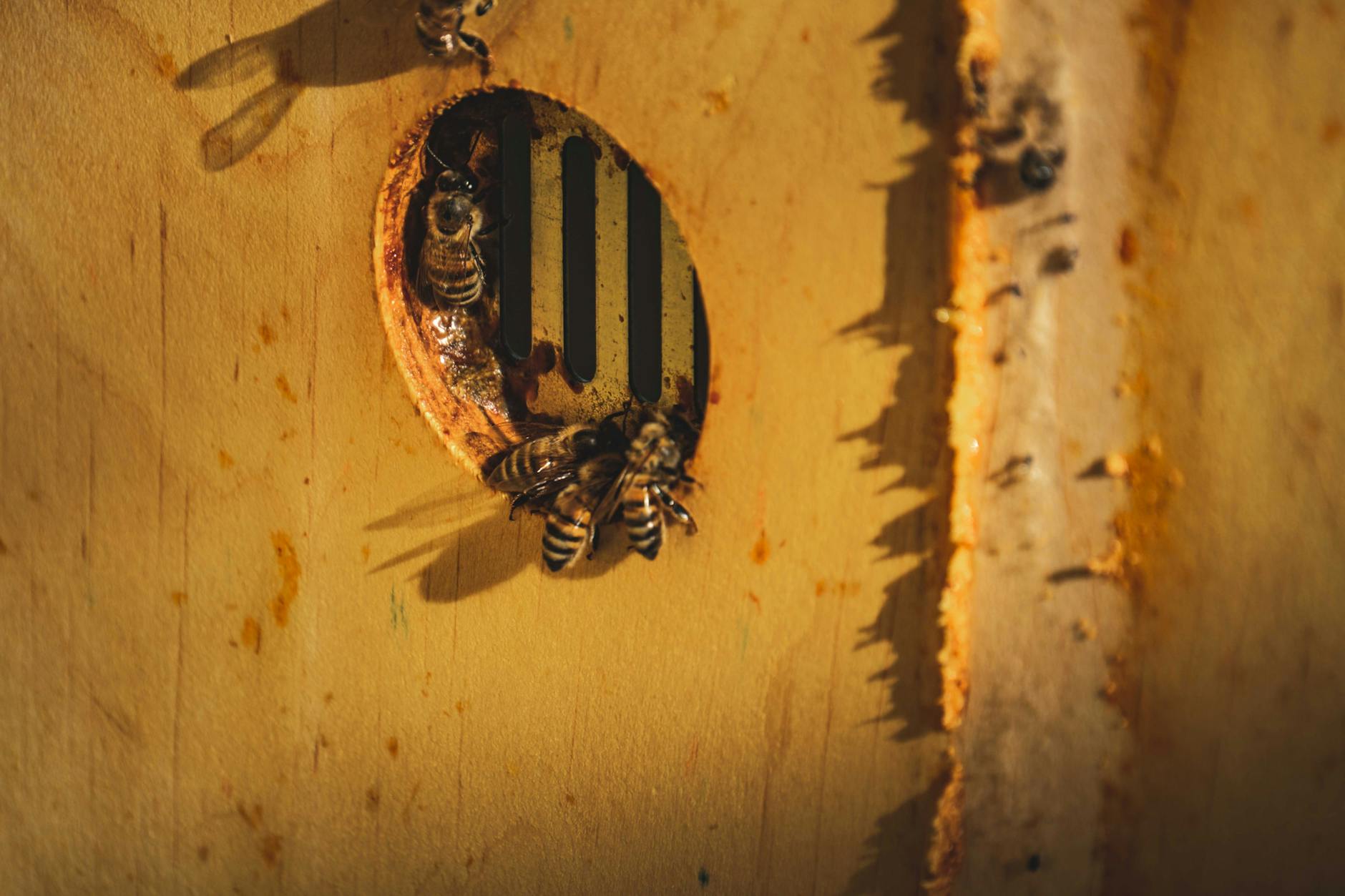
There was a time not too long ago when scientists believed that bees were automatons.
[ 1 ]
Explanation
Correct Answer: B
The first sentence introduces the idea of bees as automatons (machines). Sentence B continues this specific imagery by calling them mindless robots and hardwired. This creates a consistent theme of old beliefs. It sets up a contrast for the next sentence, which mentions that even famous scholars like Karl von Frisch once thought bees were not made for thinking.
Even the most eminent scholars of animal behavior believed that bees’ actions were guided purely by instinct—“inherited through countless generations,” wrote German scientist Karl von Frisch, who won a Nobel Prize in 1973 for discovering how bees communicate. “The brain of a bee is the size of a grass seed and is not made for thinking.”
[ 2 ]
Explanation
Correct Answer: F
The second paragraph shifts from what scientists used to believe to what they are doing now. Sentence F acts as a topic sentence, introducing the idea that scientists have spent decades learning how bees figure things out. The sentences following the gap provide specific examples of this figuring out, such as navigating unfamiliar terrain and making collective decisions.
They’ve studied how honeybee foragers fan out across miles of unfamiliar terrain in their six-week adult lifespan, navigating by sunlight and memory as they visit thousands of flowers to retrieve nectar for their colonies. They’ve followed bees back to their nests and seen how they dance to tell others where the best flowers are, and how they make collective decisions to swarm and relocate their homes.
Now researchers are uncovering remarkable new insights into how these industrious insects think. The breakthroughs have arrived thanks to a series of creative experiments designed to test how bees perceive the world, solve problems, and respond to unexpected situations.
[ 3 ]
Explanation
Correct Answer: A
The preceding sentence mentions creative experiments designed to test bee intelligence. Sentence A provides the results of those experiments.
These tiny creatures can make the sort of intelligent decisions that scientists previously believed were possible only in vertebrates.
[ 4 ]
Explanation
Correct Answer: E
This paragraph shifts the focus from laboratory intelligence to real-world survival and adaptation. Sentence E introduces the keyword adapt, which bridges the gap between scientific theory and the practical work of Melanie Kirby. This leads naturally into the mention of the Adaptive Bee Breeders Alliance, which focuses on bees that are resilient (able to adapt).
Beekeepers have for too long been stuck on a treadmill of chemical treatments that are not sustainable. Working with a group of like-minded beekeepers, researchers, and scientists, the National Geographic Explorer Melanie Kirby founded the Adaptive Bee Breeders Alliance, a national network that promotes beekeeping practices that align with the insects’ instincts and intelligence, encouraging the breeding of bees that have been shown to be resilient in their climate and environments. More beekeepers are beginning to embrace the notion that the best and strongest bees are the ones that survive on their own.
A bee’s job, we’ve come to understand, is to learn its world: to navigate and remember its ever-changing surroundings to support its colony.
[ 5 ]
Explanation
Correct Answer: D
The final paragraph compares the job of a bee (to learn) with the job of a human. Sentence D uses the phrase our job as humans to create a direct parallel with the opening of the paragraph (A bee’s job…). This flows into the concluding thought about being mindful and listening to what bees have to teach us.
We need to be mindful of the habitat they need and the poisons and stresses they don’t. Humans need to learn to listen to the bees around them, says Kirby. “I always feel like the bees still have so much more to teach us.”