
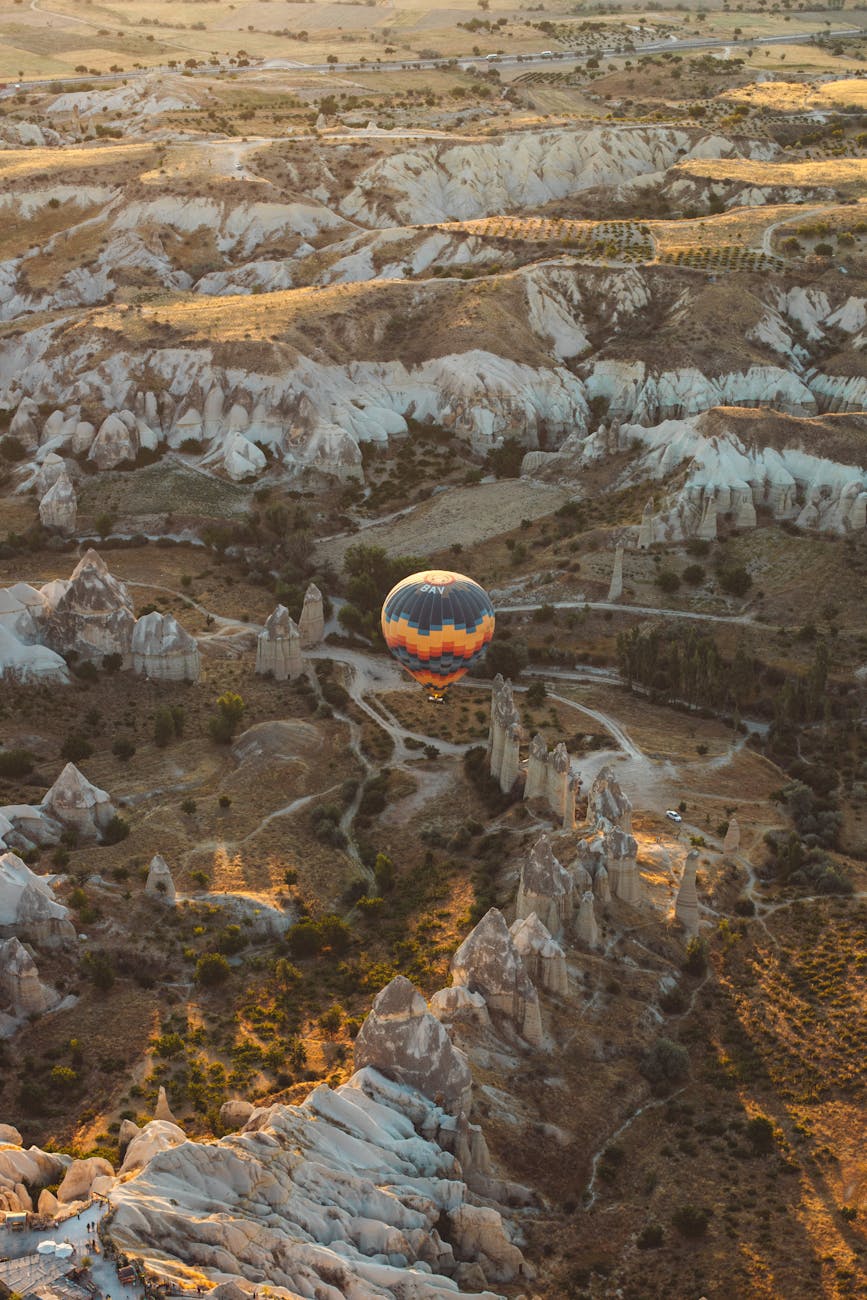
We need a preposition/participle to introduce specific examples (many strange-looking structures) of the dramatic landscapes mentioned right before it.
We need an adjective to modify the noun eruptions. The adjective form of volcano is volcanic, describing the type of geological event that formed the region.
In later times, 3.
We need a plural noun referring to people to act as the subject of the action carved. A dweller is someone who lives in a specified place.
Following the quantifier phrase thousands of, we need a plural noun for people. Residents are people who live somewhere, usually long-term or permanently.
In recent years, however, new 5.
We need a plural noun for people to act as the subject before the plural verb have arrived. While habitat means a natural home for plants or animals, an inhabitant is a person (or animal) that occupies a place.
Following the adverb too, we need an adjective. Commercial means concerned with or engaged in commerce (the buying and selling of goods and services).
The structure The NOUN of visitors requires the noun form majority, meaning the greater part or most of a group.
We need an adjective to fit into the parallel list modifying features (geological, historic and cultural). We choose historic (meaning famous, important, or significant in history) over historical (which means related to the past).
To preserve this fragile environment, local 9.
Following the adjective local, we need a plural noun referring to people who take action (urge for stricter building codes). An environmentalist is a person who works to protect the natural world.
Following the linking verb is, we need an adjective to describe the action of managing developments. Vital means absolutely necessary or essential, whereas the given word vitality is a noun meaning energy or life.